What is Phonics?
When it comes to reading, there are many resources, and it can be confusing. I wanted to provide information that is clear, concise, and helpful for anyone looking for where to begin with teaching a child to read, or supporting a child who is learning to read. I want to examine what is phonics and why it is an important skill for someone learning to read.
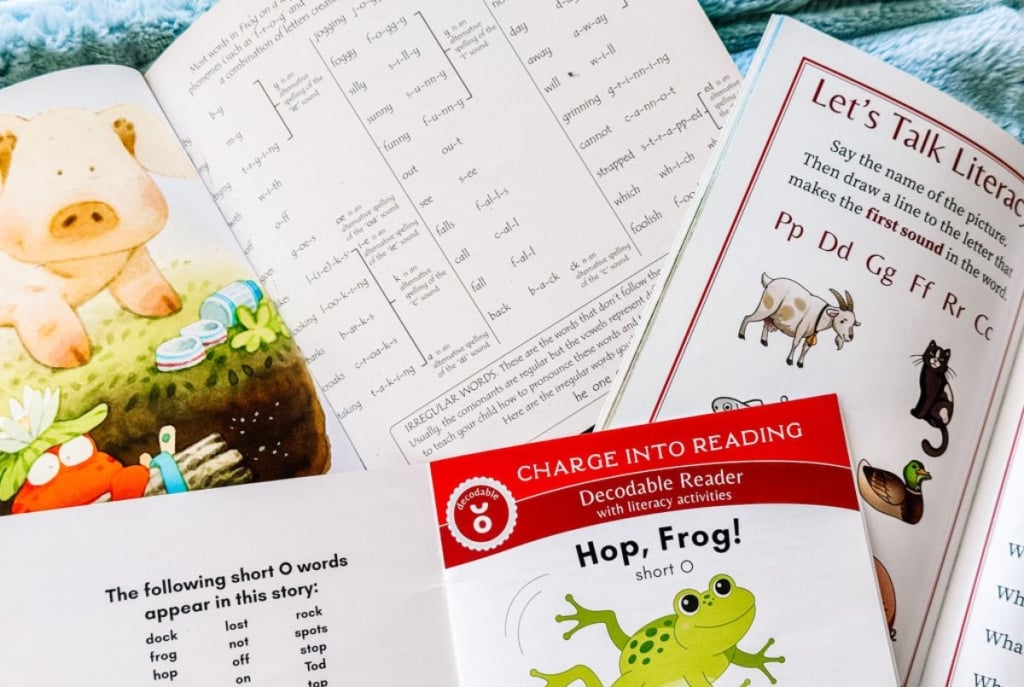
More than 20 years of experience as a speech-language pathologist, combined with my love of books, puts me in a unique place to provide some information on The Importance of Reading and Reading Readiness.
I hope that when you are done reading this article, you will understand what phonics is and how it is important for learning to read. I also have a great list of Phonics Books. Below you will find some important vocabulary used when talking about reading skills.
What is Phonics?
Phonics is the ability to understand the correlation between sounds and letters. This is the first step in learning how to read.

Another step in learning how to read is the identification of word families and sight words/ high-frequency words. In my ideal world, all phonics readers would start with only the short vowel sounds (cat, pet, tip, mop, up) and then progress to the long vowel sounds (ape, even, ice, open, unicorn).
Why is Phonics Important?
Phonics skills are vital building blocks for learning how to read. While other skills, like using context clues or predicting words, are important, phonics skills should be the foundation upon which all other reading skills are based.
Important Vocabulary for Phonics Books
Phonics Books: Phonics is the ability to understand the correlation between sounds and letters. This is the first active step in learning how to read.
Many pre-reading skills are important to know BEFORE you begin the actual process of teaching your child to read. Phonics books are books that have an educational basis and emphasize words that “follow the rules” for a beginning reader.
Phonemic Awareness: This is the ability to hear and manipulate sounds in words. This is closely related to phonological awareness, which involves moving whole parts of a word. I have an entire post on books that help with these skills.
High-Frequency words: High-Frequency words, or sight words as they are often called, are words that you will see quite often while reading. But what makes these words special is that they can not be decoded using the normal rules of language. Eg, “his” the “s” at the end of this word is pronounced like a “z”
CVC: This stands for consonant, vowel, consonant. These are typically the very first words that will be presented when learning how to sound out words. Examples are cat and dog.
Sound-Letter Correspondence: This is the relationship between the letters and the sounds that they make. English is a very difficult language to learn how to read. There are a lot of letters that make a few different sounds, and it can be extremely difficult for beginning readers.
Phonics Books Kids’ Library Essentials
For more Kids’ Library Must-Haves, head to our YouTube channel.

Expert Tip
Teaching reading at home is a rewarding process that will have lifelong benefits. These are the important things to remember:
- Make it Fun
- Be patient
If you follow these tips and use the strategies for teaching reading that I gave you, you will have a confident reader!
Frequently Asked Questions
What is phonics, and why is it important?
Phonics is the ability to understand the correlation between sounds and letters. This is the first step in learning how to read. Phonics skills are vital building blocks for learning how to read. While other skills, like using context clues or predicting words, are important, phonics skills should be the foundation upon which all other reading skills are based.
Related Content
Epilogue
Do you have a better understanding of phonics and its role in learning to read?