
Mystery Tropes and Subgenres
I’ve been a mystery fan since I was a child, so I’ve read all kinds of mystery stories. Recently, I’ve been trying to get a better handle on what I like to read, and I realized that looking at the narrative tools of the genre is a good place to start. To help you figure out your own tastes, I wanted to write this article to explain the types of mystery tropes and subgenres.
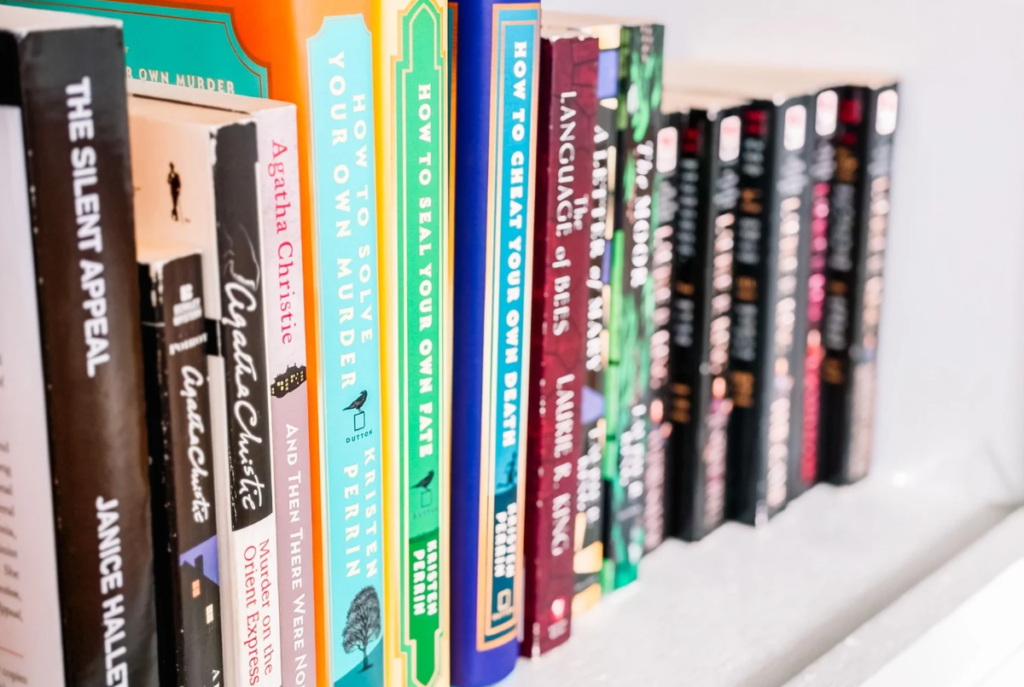
Jackie and I have read tons of mystery books over the years, and we have firm opinions about the best mystery books of all time and the best cozy mysteries, but we could debate the best mystery tropes and subgenres all day because there are so many good ones!!
What Are Mystery Tropes vs. Mystery Subgenres?
A trope is a plot device that is common in many mysteries, such as a locked room or an amateur sleuth. Some of the mystery tropes can overlap with thriller tropes, like as the missing person. Mystery subgenres, on the other hand, tell a reader what kind of mystery the book is; common ones are detective stories, cozy mysteries, or mystery thrillers. Mysteries can have multiple tropes within a story, but they usually only belong to one subgenre.
Mystery Tropes
Locked Room
Locked room mysteries feature a crime, often a murder or theft, committed in a seemingly impossible way.
Examples include:
- And Then There Were None by Agatha Christie
- Anxious People by Fredrik Backman
Closed Circle of Suspects
The closed circle of suspects: The Killer is one of them. These books are often considered “whodunit” novels.
Examples include:
- The Golden Spoon by Jessa Maxwell
- Cross Your Heart and Hope He Dies
Amateur Sleuth
Many cozy mystery books have amateur sleuths who are someone solving a mystery without formally training as a detective.
Examples include:
- Vera Wong’s Unsolicited Advice for Murderers by Jesse Q. Sutano
- How to Solve Your Own Murder by Kristin Perrin
Puzzle and Games
In puzzle mysteries, the characters have to solve a puzzle to solve the central mystery.
Examples include:
- Inheritance Games by Jennifer Lynn Barnes
- Twyford Code by Janice Hallett
Missing Persons
Missing persons books are one of the quintessential tropes when thinking about a mystery. It’s a simple one that revolves around finding the location of a missing person.
Examples include:
- The Christie Affair by Nina de Gramont
- The Lake House by Kate Morton
Holiday Mysteries
This is a trope that, though around since the golden age of mysteries, has gained mainstream traction in recent years. It’s a mystery – often a murder – set during the Christmas holiday period.
Examples include:
- Murder on 34th Street by Mariah Fredericks
- Most Wonderful Crime of the Year by Ally Carter
Vacation Mysteries
A vacation mystery takes place while the person solving it is away. Often set at the beach or in a hotel, these mysteries are some of my favorites to take on my own trips!
Examples include:
- Every Time I Go On Vacation, Someone Dies by Catherine Mack
- Murder at the Grand Alpine Lodge by Lucy Foley
Mystery Subgenres (Types of Mystery Books)
Cozy Mystery
A cozy mystery book is a subgenre of mystery in which violence, sexual content, or profanity occur off the page.
Examples include:
- The Maid by Nita Prose
- Sweetness at the Bottom of Pie by Alan Bradley
Romcozy
A romcozy is a cozy mystery romance book. This subgenre of fiction will have a mystery to solve, but without descriptions of the violence, along with a romance at it’s center.
Examples include:
- Without a Clue by Melissa Ferguson
- Dial A for Aunties by Jessie Q Sutano
Classic and Golden Age Mysteries
There are two classic mystery authors who have stood the test of time: Agatha Christie and Sir Arthur Conan Doyle. Christie wrote about Miss Marple, Hercule Poirot, and others, while Doyle only wrote about Sherlock Holmes. Both authors have spawned retellings of their work and stories about themselves too!
Examples include:
- Death on the Nile by Agatha Christie
- A Study in Scarlet by Sir Arthur Conan Doyle
Police Procedural and Detective Book Series
Police procedurals and detective books focus on the tasks of solving a crime and bringing it to justice. Some detectives are part of the police force, while others are private PIs.
Examples include:
- Still Life by Louise Penny
- The Cuckoo’s Calling by Robert Galbraith
Historical Mysteries
Remember earlier when I said most books only have one subgenre? This is the exception because, by definition, it’s two genres in one. The book’s historical setting can create hurdles that play a key role in a mystery, but remember that these mysteries can also include other subgenres within their pages.
Examples include:
- Maisie Dobbs by Jacqueline Winspear
- The Oxford Guide to Scandal and Lies by Kate Westbury
Mystery Thrillers
Another combo genre, these books have a crime to solve at the pace of a thriller, usually a race against the clock.
Examples include:
- Middle of the Night by Riley Sager
- The Girl with the Dragon Tattoo by Stieg Larsson

Best Mystery Books of All Time
Looking for mystery book recommendations by trope? This is the article for you!

Expert Tip
If you are new to the mystery genre, I’d recommend you start with a romcozy novel or a shorter classic case featuring Sherlock Holmes or Miss Marple.
Frequently Asked Questions
What are the most common mystery tropes?
Locked Room, Closed Circle, Amateur Detective, and Missing Person are all common mystery tropes.
What are the main types of mystery books?
Mystery Thrillers, Historical Mysteries, Detective Novels, and Cozy Mysteries are the main types of mystery books.
What is a locked room mystery?
Locked room mysteries feature a crime, often a murder or theft, committed in a seemingly impossible way.
What is the difference between a murder mystery and a whodunit mystery?
A murder mystery is any mystery novel involving a murder, while a whodunit follows a sleuth as they try to unravel the killer’s identity.
Related Content
Epilogue
What is your favorite mystery trope or subgenre?

