Why is Sequencing Important?
Why is sequencing important? People ask me this all the time, and there is more than one answer to that question. The simplest answer is that understanding the concept of beginning, middle, and end helps with learning to read. Teaching sequencing at a young age helps with reading readiness.
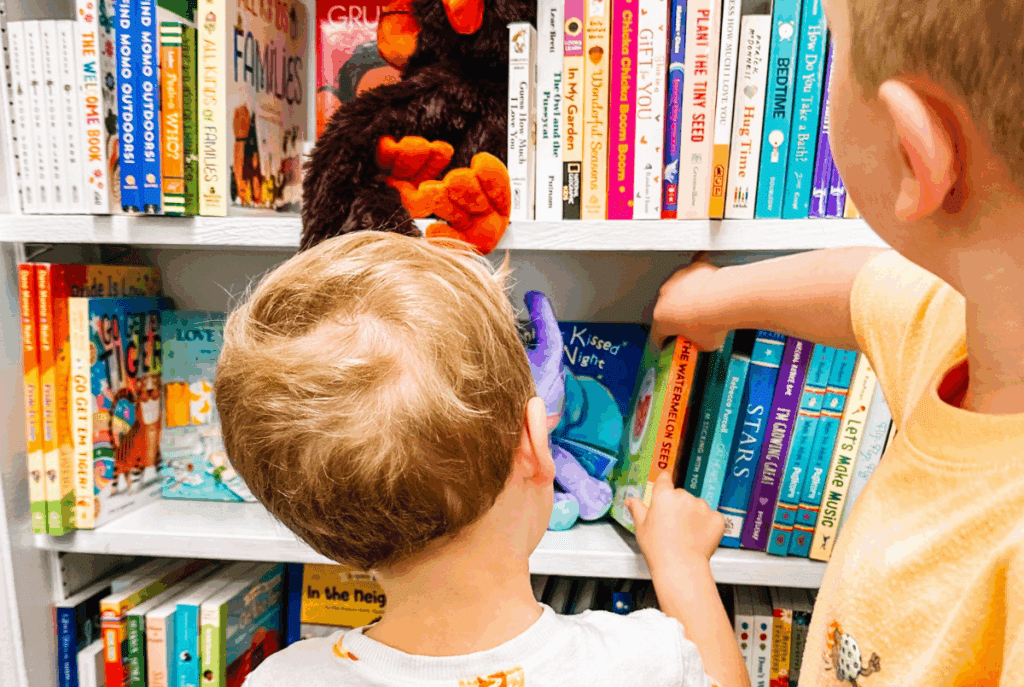
As a Speech-Language pathologist with over twenty years of experience, I can tell you that it is never too early to start reading to babies. I have a unique perspective on language development and the role books play. That is the short answer to a much longer question. This article is part of a series on the importance of reading and creating reading readiness.
Why is Sequencing Important?
Sequencing is not only the basis for story narrative, but it is also the foundation for learning to read.
- One of the first steps towards learning to read
- Helps predict narrative
- Helps with comprehension of cause and effect
- Improves the ability to follow directions
- Improves writing ability
What are the Benefits of Teaching Sequencing through Picture Books?
Picture books are a fun and engaging way to begin teaching sequencing. The pictures and text make the story memorable. The stories are straightforward and are the same every time you read them. There is often repetition in the story as well, which provides more opportunity to practice.
Teaching sequencing through picture books also provides an opportunity for engagement. There are many activities you can do in addition to reading the book to practice sequencing the parts of a book.
- Before turning the page, ask the child what they think is going to happen
- When you are finished a story, play a game of trying to remember what happened in the story from the beginning to the end. You can help your child and make it fun. If they can remember 3 things this time, maybe they will remember 4 next time.
- Pretend to make a “mistake”. For example, name the wrong animal in There Was an Old Lady Who Swallowed a Fly. See if your child can catch your mistake. If they do (or don’t), you can say, “I am so silly, that is not a cat, it’s a dog.”
- Use the internet to print up pictures of what happens in the story and see if your child can put it in the correct order. This works great for books like The Napping House or If You Give a Mouse a Cookie.
Key Phrases in Sequencing
- Beginning, middle, end
- First, next, then, last
- First, Second, Third
- Once upon a time, meanwhile, the end
Tips for Teaching Sequencing
1. Start simple. Stories like This is not my Hat by Jon Klassen, with a clear beginning, middle, and end, are a great place to start
2. Make it fun. Books are a great way to teach sequencing. I have a great list of sequencing books you can use as a starting point
3. Practice. With some kids, sequencing comes naturally. With others, it takes a little practice. If you incorporate sequencing into daily activities, learning becomes much easier

Expert Tip
- Sequencing is one step towards learning to read. You can practice sequencing at home, in the car, or just about any time, with or without books!
- Narrate what you are doing at home. Whether you are making a sandwich, putting on your jacket, or unloading groceries, everything you do at home is a great opportunity to model sequencing.
Sequencing Books Kids’ Library Essentials
For more Kids’ Library Must-Haves, head to our YouTube channel.
Frequently Asked Questions
Why is sequencing important?
1. One of the first steps towards learning to read
2. Helps predict narrative
3. Helps with comprehension of cause and effect
4. Improves the ability to follow directions
5. Improves writing ability
Related Content
Epilogue
Did you find this article on teaching sequencing helpful? Please let me know if there are any other topics you would like to see covered.